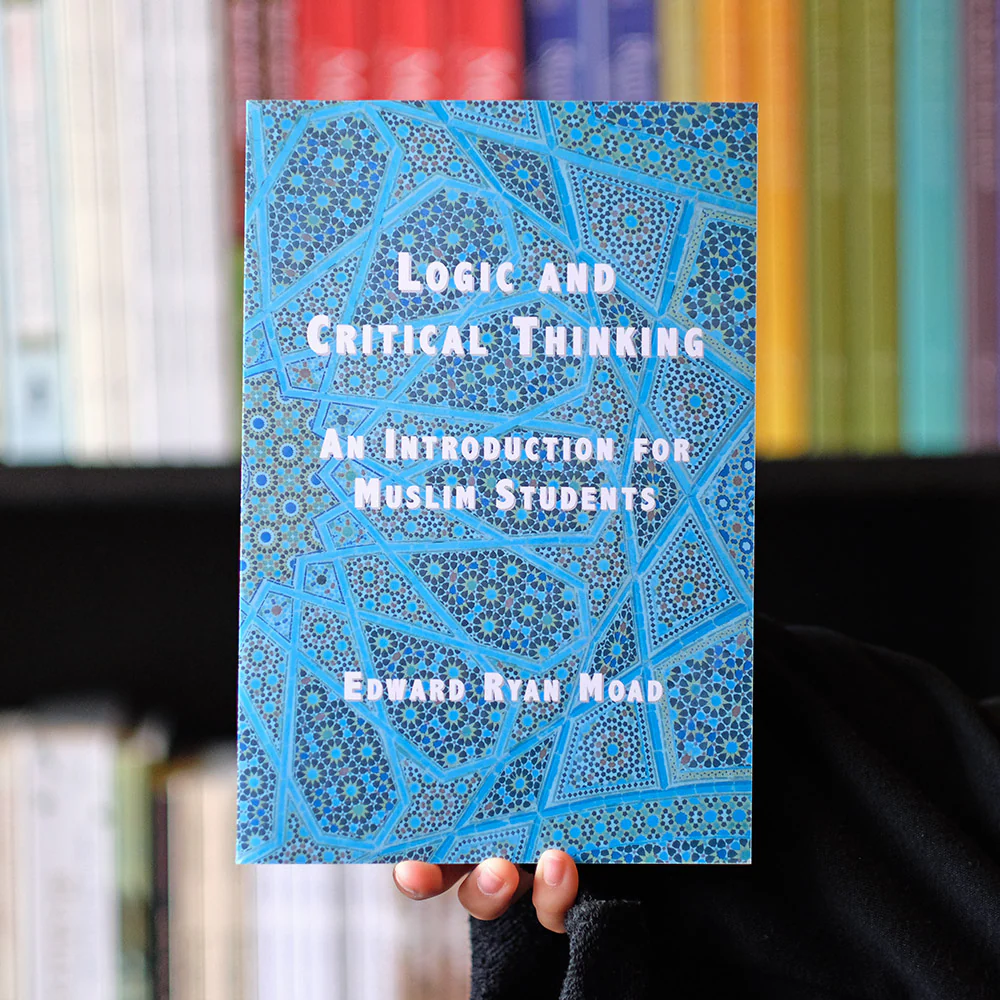
Logic and Critical Thinking: An Introduction for Muslim Students
Edward Ryan Moad
Paperback
9781567446104
Contents
Part 1 Basic Concepts: What is Critical Thinking?
Chapter 1. Critical Thinking and Judgment: 1.2. Judgments and Truth 1.3. Critical Thinking and Debate: Separating the Benefits from the Dangers
Chapter 2: Propositions: 2.1. Subject and Predicate Terms 2.2. Contradiction and Entailment
Chapter 3: Inference and Argument: 3.1. Arguments and Other Explanations 3.2. Formalizing Arguments and Other Explanations
Chapter 4: Inferential Diagrams: 4.1. Linked Inferences and Implicit Premises 4.2. Basic Inferential Analysis in Five Steps
Part 2 Deductive Reasoning
Chapter 5: Things and Categories: 5.1. Visualizing Categorical Propositions 5.2. Necessary and Sufficient Conditions 5.3. Applying Venn Diagrams 5.4. Definitions 5.5. Definition Mistakes
Chapter 6: Categorical Syllogisms: 6.1. Deduction and Validity 6.2. The Rules of Inference for Categorical Syllogisms
Chapter 7: Truth-functional Deductive Argument Forms: 7.1. Modus Ponens (Affirming the Antecedent) 7.2. Fallacy of Affirming the Consequent 7.3. Modus Tollens (Denying the Consequent) 7.4. Fallacy of Denying the Antecedent 7.5. Hypothetical Syllogism 7.6. Bi-conditionals 7.7. Disjunctive Syllogism
Chapter 8: Truth-functional Natural Deduction: 8.1. Rules of Inference 8.2. Well-formed formulas 8.3. Replacement Rules 8.4. Constructing Proofs
Part 3 Inductive Reasoning
Chapter 9: Inductive Reasoning: 9.1. Analogy 9.2. Analogical Arguments 9.3. Evaluating Analogical Arguments
Chapter 10: Inductive Generalization: 10.1. Evaluating Inductive Generalization 10.2. Sample Size 10.3. Sample Representativeness 10.4. Random Sampling 10.5. Stratification 10.6. Inductive Generalization in Natural Science 10.7. Observation
Chapter 11: Causal vs. Statistical Relevance: 11.1. Different Kinds of Causal Relevance 11.2. Causal Conditions 11.3. First Principles of Causal Reasoning 11.4. Hypothetico-Deductive Method 11.5. Mill’s Methods 11.5.1. Method of Agreement 11.5.2. Method of Difference 11.5.3. Method of Agreement and Difference 11.5.4. Concomitant Variations 11.5.5. Method of Residues
Chapter 12: Inference to the Best Explanation: 12.1. Plausibility 12.2. Consistency with Known Facts 12.3. Comprehensiveness 12.4. Explanatory Power 12.5. Simplicity 12.6. Predictability 12.7. The Unfalsifiable
Original: $38.95
-70%$38.95
$11.69Product Information
Product Information
Shipping & Returns
Shipping & Returns
Description
Edward Ryan Moad
Paperback
9781567446104
Contents
Part 1 Basic Concepts: What is Critical Thinking?
Chapter 1. Critical Thinking and Judgment: 1.2. Judgments and Truth 1.3. Critical Thinking and Debate: Separating the Benefits from the Dangers
Chapter 2: Propositions: 2.1. Subject and Predicate Terms 2.2. Contradiction and Entailment
Chapter 3: Inference and Argument: 3.1. Arguments and Other Explanations 3.2. Formalizing Arguments and Other Explanations
Chapter 4: Inferential Diagrams: 4.1. Linked Inferences and Implicit Premises 4.2. Basic Inferential Analysis in Five Steps
Part 2 Deductive Reasoning
Chapter 5: Things and Categories: 5.1. Visualizing Categorical Propositions 5.2. Necessary and Sufficient Conditions 5.3. Applying Venn Diagrams 5.4. Definitions 5.5. Definition Mistakes
Chapter 6: Categorical Syllogisms: 6.1. Deduction and Validity 6.2. The Rules of Inference for Categorical Syllogisms
Chapter 7: Truth-functional Deductive Argument Forms: 7.1. Modus Ponens (Affirming the Antecedent) 7.2. Fallacy of Affirming the Consequent 7.3. Modus Tollens (Denying the Consequent) 7.4. Fallacy of Denying the Antecedent 7.5. Hypothetical Syllogism 7.6. Bi-conditionals 7.7. Disjunctive Syllogism
Chapter 8: Truth-functional Natural Deduction: 8.1. Rules of Inference 8.2. Well-formed formulas 8.3. Replacement Rules 8.4. Constructing Proofs
Part 3 Inductive Reasoning
Chapter 9: Inductive Reasoning: 9.1. Analogy 9.2. Analogical Arguments 9.3. Evaluating Analogical Arguments
Chapter 10: Inductive Generalization: 10.1. Evaluating Inductive Generalization 10.2. Sample Size 10.3. Sample Representativeness 10.4. Random Sampling 10.5. Stratification 10.6. Inductive Generalization in Natural Science 10.7. Observation
Chapter 11: Causal vs. Statistical Relevance: 11.1. Different Kinds of Causal Relevance 11.2. Causal Conditions 11.3. First Principles of Causal Reasoning 11.4. Hypothetico-Deductive Method 11.5. Mill’s Methods 11.5.1. Method of Agreement 11.5.2. Method of Difference 11.5.3. Method of Agreement and Difference 11.5.4. Concomitant Variations 11.5.5. Method of Residues
Chapter 12: Inference to the Best Explanation: 12.1. Plausibility 12.2. Consistency with Known Facts 12.3. Comprehensiveness 12.4. Explanatory Power 12.5. Simplicity 12.6. Predictability 12.7. The Unfalsifiable